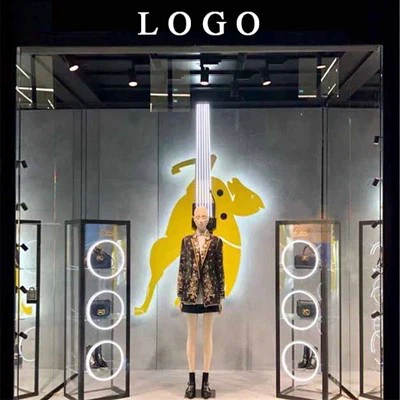
In the modern window design movement, there is a section of people who obey the rules of modern design. At the same time, there were still some people who were not willing to completely obey this currently popular rule.
Prominent representatives of obedience to the rules are the Dutch Mannerist, the Russian Composition, the Scandinavian designs of Aldo and Aspland, and the American streamlined design. Although these designs and productions demonstrate complexity and variability, they have always shared a common connection. For example, the Mannerists in Dutch art and space and window design movements advocated strict aesthetics, using primary colors in creation, and the flat and three-dimensional shapes were strictly in accordance with geometric styles. France and Italy were also well represented in the campaign. The Italian Futurists associated themselves with left-wing fascist ideology and wanted to use industrial culture to build a new modern state. French Le . Corbusier's art of architectural design is also an outstanding example of the embodiment of the pure spirit of modernism.
Designs in other countries do not fully comply with this rule. Sweden and the United States, for example, created a popular modern style that was accepted by the general population. Scandinavia and the United Kingdom are less inclined to go to extremes, and in the choice of materials, they generally prefer to use natural materials rather than too geometric. Due to the Great Depression of the late 20s, a small group of industrial design pioneers emerged in the United States, applying mechanical age designs to products such as trains, refrigerators, vacuum cleaners, and automobiles.
Although the concept of decoration was strongly opposed by the modern space and window design movement, decoration still played an important role during this period.
Popular designs often used the language of geometric forms on architecture, creating a style that was highly successful. (e.g. the Chrysler Building in New York) was named Art Deco because of an exhibition in Paris in 1925 called the 'Art Deco Exhibition'. Although critics had mixed reviews, this did not affect the popularity of Art Deco in the 30s. But, even so, modernists dismissed it and gave it another name: Moderne. Moderne refers to a style that lies somewhere between Art Deco and Modernism.
During this period, the idea of modern design has become a mode of thinking for designers. This kind of thinking is embodied in all production and life. But over time, when a thing or an idea does not fit into the context or economic environment of the time. Then it will be abandoned by the times. Thus, after the war, modernism, which was taken for granted, and its values were severely challenged. The methods used by modernism were too limited to design, and its cult of machinery suppressed the inventive creativity of the human mind. At the same time, it ignores the feelings and complex meanings given to the object personally, and believes that only one design method is right and appropriate, which is undoubtedly wrong.
Due to the post-war economic stagnation and changes in people's needs, pragmatism emerged in Britain under the pressure of the war. Pragmatic design means giving everyone the same choice, spending on a tightly controlled quantitative plan. The rest of Europe was influenced by the classical style advocated by the Nazis and Italian fascists. The Nazis associated the modern movement with Jewish and communist symbols, so the modern movement was unacceptable at this time. At the same time, in order to revive the economy, countries have developed corresponding plans. The key strategy in these plans to revive the economy is design, its role in increasing exports, promoting trade and production.